A: If we have stock, MOQ 3000pcs. | B: If out of stock, MOQ is 10000pcs.


Views: 0 Author: Site Editor Publish Time: 2026-10-23 Origin: Site


Facial toner is an important product category for many skincare brands. Depending on the formulation and intended use, toner may be packaged in a traditional bottle with a screw cap, a lotion pump bottle, or a spray bottle that delivers a fine mist.
For brands developing facial mists, hydrating toners, and refreshing skincare products, fine mist spray bottles for facial toner offer a convenient way to apply liquid formulations across the face. The right packaging can also support product differentiation, brand presentation, and a consistent user experience.
For cosmetic packaging buyers, choosing a suitable spray bottle involves more than selecting an attractive container. Spray performance, formula compatibility, bottle material, capacity, leakage resistance, and customization options all need to be considered.
This guide explains how to choose a facial toner spray bottle and what skincare brands, private-label manufacturers, and wholesale buyers should check before placing an order.
A fine mist spray bottle dispenses liquid through a spray mechanism that breaks the liquid into smaller droplets. This format is commonly considered for facial toners and other lightweight skincare products designed for spray application.
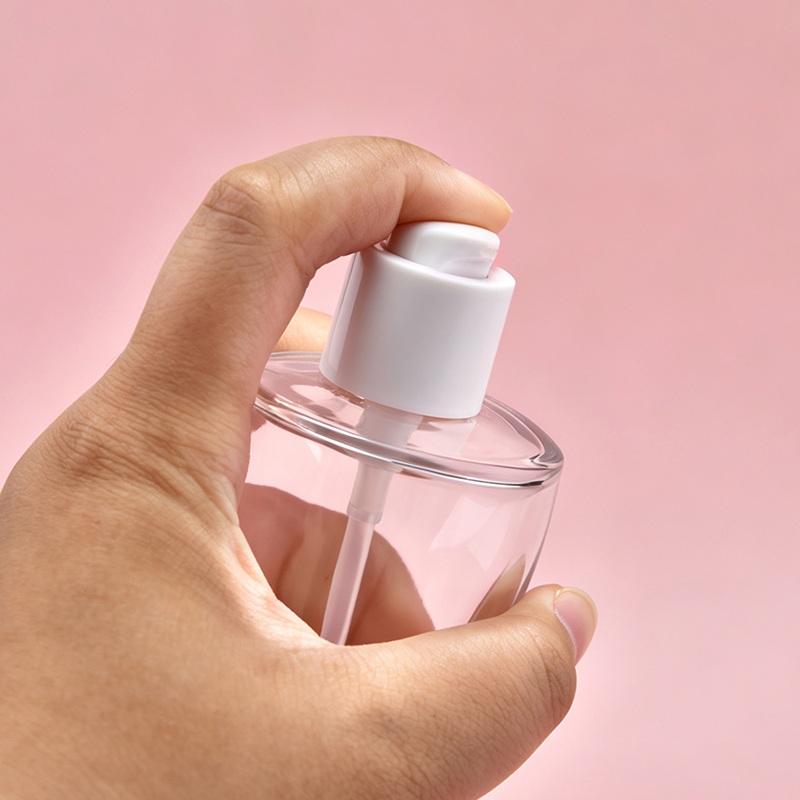
A spray format allows users to apply toner without pouring the product into their hands or using a separate cotton pad. It may suit products designed for quick application during a daily skincare routine.
The actual user experience depends on the spray nozzle, formula viscosity, bottle design, and actuator. Brands should test the complete packaging system with the intended formulation before finalizing a design.
Some facial toners are formulated to be sprayed directly onto the face, while others are designed primarily for application with cotton pads or hands.
A fine mist bottle may be appropriate for water-based facial mists and compatible low-viscosity toners. However, not every toner formula is suitable for spray packaging. Suspended particles, excessive viscosity, or incompatible ingredients may affect nozzle performance.
Packaging is part of a skincare product's visual identity. Bottle shape, color, finish, label design, and spray actuator can help a brand create a consistent appearance across its product range.
For brands selling multiple skincare products, a coordinated toner bottle can also complement serum bottles, lotion containers, and cream jars.
The spray nozzle is one of the most important components of a facial toner bottle. It determines how the product is dispensed and has a direct effect on the application experience.
A fine mist nozzle is designed to disperse liquid into relatively small droplets. The resulting spray pattern and droplet size vary according to nozzle design, pump construction, formulation properties, and operating conditions.
When evaluating a bottle, buyers should consider:
Whether the spray pattern is suitable for facial application.
Whether the mist is reasonably consistent between actuations.
Whether the pump requires an appropriate amount of force to operate.
Whether the nozzle continues to function after repeated use.
Whether the product leaks or drips around the actuator.
Do not rely on the term “fine mist” alone. Request samples and test the actual spray performance with the intended formula.
Spray output refers to the amount of liquid dispensed each time the pump is pressed. Different products may require different output levels depending on their intended use.
For a facial toner, the brand should consider the desired application experience, product consumption, and number of actuations needed for routine use.
Ask the packaging supplier whether the output specification is available for the selected pump and whether it can be tested with the intended formulation.
The nozzle must be compatible with the formulation. A watery toner may behave differently from a toner containing a higher concentration of dissolved solids, botanical extracts, or other functional ingredients.
If the formulation contains suspended particles or ingredients that may crystallize or accumulate around the nozzle, additional compatibility testing may be necessary.
Packaging tests should include repeated dispensing, storage under expected conditions, and checks for clogging, leakage, and changes in spray performance.
Bottle capacity influences portability, product positioning, packaging cost, and the expected usage period. The most suitable size depends on the brand's product concept and target market.
Smaller capacities may suit travel-oriented products, sample sets, promotional kits, and skincare discovery collections.
They can help brands introduce a new formula or create a compact product format. Before choosing a small bottle, check whether its pump can operate reliably at the intended scale and whether the packaging meets the applicable market requirements.
Medium-sized bottles may be suitable for facial toners intended for regular home use. They can provide a balance between portability, product quantity, and shelf presentation.
The final capacity should reflect the brand's positioning, expected usage, retail channel, and target price range rather than following a single universal standard.
Larger containers may be considered for products intended for frequent application or for customers who prefer fewer repurchases.
However, increasing bottle capacity also affects weight, storage, handling, and the amount of product exposed during repeated use. Brands should evaluate the complete packaging system before selecting a larger format.
Before approving a bottle size, consider:
Target customer and usage habits.
Product viscosity and dispensing output.
Required packaging dimensions.
Shipping and storage requirements.
Retail shelf presentation.
Target unit cost and total packaging budget.
Testing samples in the intended sales and usage context can help brands avoid choosing a bottle that looks attractive but is inconvenient in practice.
Bottle material affects appearance, weight, durability, chemical compatibility, and overall packaging cost. The best material depends on the formulation and the brand's product requirements.
PET is commonly used for cosmetic packaging. It can provide a lightweight container with a clear appearance, depending on the selected grade and design.
PET bottles may be considered for certain facial toner and mist products. Buyers should confirm the material grade, compatibility with the formula, and suitability for the expected storage conditions.
Polypropylene (PP) is used in a variety of cosmetic packaging components. Depending on the design, it may be considered for bottle bodies, closures, or spray components.
The suitability of PP depends on the specific formulation and packaging construction. Buyers should verify that the complete bottle-and-pump system is compatible with the product rather than selecting material based on the bottle body alone.
Some brands may prefer different plastic materials, colored bottles, frosted finishes, or a combination of materials to achieve a particular appearance.
Material selection should account for product compatibility, required transparency or opacity, visual identity, and the packaging's end-of-life considerations.
Before approving bulk production, conduct compatibility testing using the intended toner and the actual packaging components.
Evaluate leakage, deformation, discoloration, odor changes, spray performance, and other relevant indicators during storage. Testing conditions and acceptance criteria should be based on the product's requirements and the brand's quality procedures.
For private-label skincare businesses, customized packaging can help create a recognizable product identity while maintaining practical dispensing performance.
Bottle color can be selected to match a brand's visual identity or differentiate product lines. Clear, white, amber, and other colored options may be considered where available.
Before confirming a color, request a sample or approved color reference. The final appearance may vary depending on the material, surface finish, and manufacturing process.
Brand names, logos, product information, and decorative elements can be incorporated through suitable printing or labeling methods, depending on the bottle material and design.
Buyers should confirm the printable area, artwork format, color requirements, and durability expectations. It is also important to ensure that required product information remains readable and complies with destination-market labeling rules.
A toner bottle may need to coordinate with serum bottles, moisturizer containers, cleansing products, and other items in the same collection.
Using compatible colors, finishes, and design elements can help create a unified product line. However, different formulas may require different dispensing systems or materials, so visual consistency should not override functional requirements.
Before production, confirm the bottle and pump specifications, artwork approval, color sample, decoration method, packaging quantity, production lead time, and quality acceptance criteria.
For a new design, it is advisable to approve a representative sample before authorizing full production.
Packaging that performs well with water during a basic demonstration may behave differently when used with a commercial toner formula. Testing the complete system helps identify potential problems before a large order is placed.
Check the assembled bottle for leakage around the neck, closure, pump, and other connection points.
Testing should reflect expected transportation, storage, and handling conditions. The test procedure should be agreed upon by the brand and packaging supplier, including the orientation and duration used for evaluation.
Operate the pump repeatedly to check whether it primes correctly and continues to dispense the formula.
Observe changes in spray pattern, output consistency, actuator movement, dripping, or clogging. Testing should use the actual formula whenever possible.
Fill the packaging with the intended toner and observe it under appropriate storage conditions.
Check for changes in the bottle, closure, pump components, formula appearance, odor, and dispensing performance. If the product contains sensitive ingredients, the brand should also perform its normal formulation stability and microbiological assessments.
Review the finished packaging for protection during shipping. Depending on the order, this may include checking inner packaging, carton strength, component protection, and the risk of accidental actuation or leakage.
For international shipments, agree on the packaging and inspection requirements before production to reduce the risk of damage during transportation.
For importers, distributors, skincare manufacturers, and private-label brands, supplier evaluation should cover both product performance and commercial requirements.
Request details for the bottle material, nominal capacity, dimensions, neck finish, pump type, output per actuation where available, and closure design.
Specifications should describe the actual model being quoted. Similar-looking bottles may have different neck sizes, pumps, or component dimensions.
Minimum order quantity may vary depending on stock availability, customization requirements, and the specific product model.
Ask the supplier to confirm the MOQ for stock products and customized orders separately. Also clarify sample availability, sample charges if applicable, production lead time, and repeat-order arrangements.
Ask how the supplier checks bottle dimensions, pump functionality, appearance, leakage, and packaging condition.
For customized orders, written specifications and approved samples provide a clearer basis for production and inspection. Buyers should agree on acceptable quality limits before placing a large order.
For international orders, confirm carton quantity, packaging method, shipping terms, destination port, and required commercial documents.
The buyer should also verify the labeling and compliance requirements of the target market, particularly when the packaging will be used for a finished cosmetic product.
Guangzhou Ruijia Packing Products Co., Ltd. supplies cosmetic packaging products for beauty and skincare brands, including plastic spray bottles and other packaging formats.
Buyers looking for fine mist spray bottles for facial toner can explore the company's plastic cosmetic packaging range and complete product catalog to identify suitable packaging options.
When contacting the supplier, provide the following information to help narrow down the options:
Intended application, such as facial toner or facial mist.
Required bottle capacity.
Preferred material and appearance.
Spray performance requirements.
Logo printing or other customization needs.
Estimated order quantity.
Destination market and delivery requirements.
The supplier can then confirm which available models match the requested specifications and whether customization is possible for the selected product.
For product inquiries, samples, and wholesale packaging discussions, visit Ruijia Packing's official website.
The best bottle depends on the formula and intended application. A fine mist spray bottle may suit lightweight toners designed for spray application, while other formulas may be better suited to conventional bottles or pump dispensers.
No. Formula viscosity, suspended particles, ingredients, and nozzle design can affect performance. The packaging should be tested with the actual toner before mass production.
PET and PP are among the materials used in cosmetic packaging, but the appropriate choice depends on the complete packaging design and formula compatibility. Buyers should request material details and conduct suitable compatibility tests.
Customization may be available depending on the product model, decoration method, quantity, and supplier capability. Confirm artwork requirements, MOQ, color approval, and lead time before placing an order.
Choose compatible bottle and pump components, confirm the closure fit, and test the assembled packaging with the intended formula. Transportation and storage tests can help identify leakage risks before bulk shipment.
Ask for product specifications, material details, pump performance information, sample availability, MOQ, customization options, production lead time, quality-control procedures, and shipping arrangements.
Choosing the right fine mist spray bottles for facial toner requires balancing spray performance, bottle capacity, material compatibility, design, and cost. For skincare brands, a suitable packaging solution should dispense the intended formula consistently, withstand expected handling conditions, and support the brand's visual identity.
For wholesale buyers and private-label manufacturers, the best approach is to confirm the specifications, test samples with the actual formula, approve customized artwork, and agree on quality requirements before bulk production.
Ruijia Packing offers a range of cosmetic packaging options for skincare applications. Contact the company to discuss suitable facial toner spray bottles, customization requirements, and wholesale order details.
Hot Tags: fine mist spray bottles for facial toner, facial toner spray bottle, fine mist cosmetic spray bottle, empty toner spray bottles wholesale, plastic toner spray bottle manufacturer, custom facial mist bottle, cosmetic spray bottle supplier, fine mist bottle for skincare, wholesale cosmetic spray bottles, custom toner packaging