A: If we have stock, MOQ 3000pcs. | B: If out of stock, MOQ is 10000pcs.


Views: 0 Author: Site Editor Publish Time: 2026-08-13 Origin: Site


The global cosmetic jar market continues to expand, driven by increasing demand for premium skincare and personal care products. Cosmetic glass jars with lids are specified for creams, moisturizers, balms, and treatment products where product protection and premium presentation are priorities. Guangzhou Ruijia Packaging Products Co., Ltd. supplies cosmetic glass jars with lids to clients across North America, Europe, and other international markets, with capacities ranging from 5g to 500g across multiple glass types and closure options.
The cosmetic jar market encompasses multiple material categories including glass, plastic, and sustainable alternatives. Skincare applications represent the largest end-user segment, accounting for the majority of market demand. The skincare end-use segment is projected to maintain its dominant position throughout the forecast period.
Several factors contribute to sustained market growth. Consumer preference for premium packaging materials that communicate quality and purity has driven brands toward glass. The chemical stability of glass ensures that active ingredients remain effective over extended shelf lives. Sustainability requirements have further accelerated adoption, as glass is infinitely recyclable and can incorporate post-consumer recycled content. The rise of domestic cosmetics brands in emerging markets has also fueled glass packaging adoption, driving sustained growth in demand for mid-to-high-end glass jars.
Capacity segments in the cosmetic jar market include below 50ml, 50ml to 100ml, 100ml to 200ml, and above 200ml categories. The 100ml to 200ml capacity segment reflects strong demand for mid-sized formats suitable for daily-use skincare products. Guangzhou Ruijia Packaging Products Co., Ltd. manufactures glass jars with lids across this capacity range, with dimensional specifications available for client verification.
Cosmetic glass jars are manufactured from different glass compositions, each offering specific properties for various applications. Understanding material differences supports appropriate selection for specific product requirements.
Soda-lime glass is the most commonly used material for cosmetic glass jars. This glass type provides adequate chemical durability for most skincare formulations and is cost-effective for high-volume production. The material is suitable for standard creams, lotions, and moisturizers with typical storage requirements.
Borosilicate glass offers enhanced chemical resistance and thermal stability compared to soda-lime glass. This glass type is recommended for formulations requiring high heat resistance or chemical durability. Borosilicate glass provides better resistance to thermal shock and is more chemically durable.
Amber glass provides UV protection for light-sensitive formulations. The amber color is achieved through the addition of iron and sulfur compounds during glass melting. Amber glass blocks approximately 95 percent of UV radiation, helping preserve ingredients including vitamins, retinol, and botanical extracts. Cobalt blue glass provides similar UV protection with a different aesthetic. Clear glass offers product visibility but minimal UV protection, making it suitable for products with short expected shelf life or products stored in opaque secondary packaging.
Purple and green glass options are available for brands seeking distinctive visual identities. Tinted glass jars block UV rays, which can degrade ingredients like essential oils or vitamins. Clear glass jars are best for products stored in dark places, while tinted options are ideal for shelves or vanities exposed to light.
Frosted glass finishes are achieved through acid etching or sandblasting, creating a matte surface texture. Frosted glass provides a soft visual appearance and improved grip. The finish can mask minor surface imperfections and fingerprints. Frosted glass jars are popular for premium skincare product lines.
Guangzhou Ruijia Packaging Products Co., Ltd. manufactures cosmetic glass jars in soda-lime and borosilicate glass, with amber, clear, cobalt blue, purple, green, and custom color options available. Surface finishes include glossy, matte, and frosted textures.
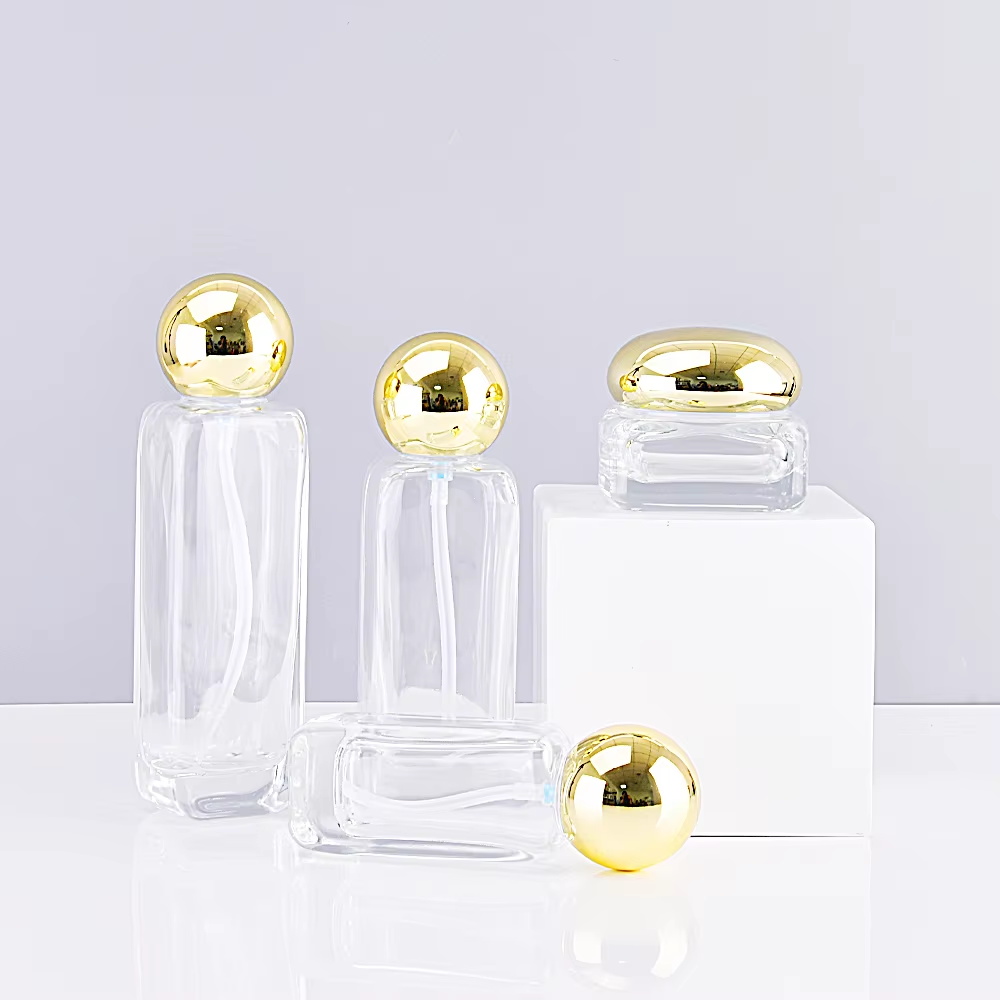
Cosmetic glass jars with lids are available in multiple capacity ranges to accommodate different product types and usage patterns. Selection should be based on use case and product characteristics.
Small-capacity jars from 5g to 15g are used for sample sizes, eye creams, lip balms, and travel products. Common sizes include 5g, 10g, and 15g formats. These are ideal for travel-sized balms, samples, or eye creams. A 5g jar typically measures approximately 40mm in diameter and 25mm in height. These formats are suitable for premium facial skincare products where small quantities are appropriate for regular use.
Medium-capacity jars from 30g to 60g represent the most commonly specified sizes for daily-use facial creams and moisturizers. Common sizes include 30g, 50g, and 60g formats. These are suitable for regular face creams, serums, or body butters. A 30g jar with sealed cap is commonly specified for face creams and skincare treatments. A 50g jar typically measures 65mm in diameter and 42mm in height. A 60g jar typically measures approximately 70mm in diameter and 45mm in height. Neck finishes for these capacities are typically 89mm diameter, compatible with standard closure systems.
Large-capacity jars from 100g to 200g are used for body creams, body butters, and treatment products. Common sizes include 100g, 150g, and 200g formats. These are suitable for body lotions, bath salts, or bulk DIY products. A 100g jar typically measures 73mm in diameter and 48mm in height.
Extra-large jars from 240g to 500g are used for professional-use products, bulk formats, and value-size retail products. These formats are specified for products with high usage rates and professional applications.
Guangzhou Ruijia Packaging Products Co., Ltd. manufactures cosmetic glass jars with lids across this capacity range, with dimensional specifications verified through quality control procedures and tolerance documentation available upon request.
Cosmetic glass jars with lids require compatible closure systems that provide sealing, product protection, and user convenience. Multiple closure options are available for wholesale procurement.
Plastic screw caps are the most common closure type for cosmetic glass jars. Caps are available in multiple colors and finishes, including matte, glossy, and metallic finishes. Cap liners provide additional sealing performance, with options including induction liners, pressure-sensitive liners, and foam liners. Liner selection depends on product chemistry and sealing requirements. Cap color matching is available for brand coordination.
Bamboo lids have gained popularity as a sustainable closure option. Bamboo lids are manufactured from pressed bamboo fiber and provide a wood-like texture that complements natural and organic skincare positioning. Bamboo lids are available in light and dark finishes with custom branding through laser engraving. The combination of glass jar and bamboo lid is frequently specified for natural skincare product lines.
Metal closures including aluminum screw caps provide a premium appearance and robust sealing performance. Metal caps are available in brushed, polished, and anodized finishes in colors including gold, silver, and rose gold. Induction sealing is commonly used with metal caps for extended shelf life. Metal closures offer good barrier properties and are compatible with automated filling lines.
Security seal closures are available for products requiring tamper-evident packaging. A security seal comprises rings joined together by breakable appendices. One ring engages with the lid while the other positions below the neck rib. When the lid is unscrewed for the first time, the appendices break, providing visible evidence of opening. Seals can be manufactured in different colors to identify different products.
Custom closures can be developed for specific project requirements, including proprietary closure designs, custom colors, and branded closure systems. Custom mold development for closures adds tooling investment and lead time. Minimum order quantities for custom closures typically exceed those for standard closures.
Guangzhou Ruijia Packaging Products Co., Ltd. supplies cosmetic glass jars with closure matching and compatibility testing, offering plastic screw caps, bamboo lids, and metal closure options.
Refillable glass jar systems have emerged as a significant trend in cosmetic packaging, addressing both sustainability concerns and premium brand positioning. Refillable formats typically incorporate post-consumer recycled glass content in the outer jar. The primary container is designed in double-walled glass with frosted finish. The jar and cap are retained across multiple refill cycles, significantly reducing packaging waste.
The technical challenge with refillable glass jars is dimensional variation in the glass itself. Snap-on and screw-on refill systems have historically struggled with glass tolerances, often making refills too tight or not tight enough. Advanced refill systems position the refill mechanism within a controllable thickness range, eliminating the need to account for variations in jar thickness. This ensures consistent user experience across refill cycles.
Lifecycle assessments conducted on refillable glass jar formats indicate that after two refills, the packaging has a lower environmental impact than a single-use, non-refillable jar. Material choices include PP for the refill cup for broad recyclability, combined with recycled glass content in the outer jar. The closure design has been optimized for weight reduction, with single-piece capsule designs eliminating additional components and reducing overall material consumption.
Glass is 100 percent recyclable without losing quality, making it an eco-friendly choice. Airtight lids further protect products from contamination and oxidation. Glass jars offer long-term value with durability, premium branding, and sustainability. Many brands offset costs with refillable systems or eco-friendly marketing.
Guangzhou Ruijia Packaging Products Co., Ltd. supports sustainability initiatives through material sourcing, lightweighting strategies, and guidance on recyclability and refillable systems.
Cosmetic glass jar manufacturing involves multiple technical processes that affect product quality, dimensional accuracy, and production efficiency. Understanding these processes supports evaluation of supplier capabilities.
Batch preparation involves weighing and mixing raw materials including silica sand, soda ash, limestone, and colorants. The batch composition determines glass properties including chemical durability, thermal shock resistance, and color. Colorant addition for amber, cobalt blue, or custom colors requires precise measurement to achieve consistent tint across production runs.
Melting occurs in furnaces operating at temperatures between 1,420 and 1,460 degrees Celsius. The melting process requires precise temperature control and residence time to achieve homogeneous glass composition. The raw materials are mixed and melted at high temperatures, then quickly cooled and molded.
Forming processes for glass jars include pressing and press-blow methods. Pressing uses a plunger to shape glass in a mold, typically for wide-mouth jars with thick walls. The press-blow method combines pressing for initial shape with blowing for final form. Forming process selection depends on jar geometry and wall thickness requirements. Process parameters including glass temperature, mold temperature, and cycle time affect dimensional consistency and surface quality.
Annealing is a controlled cooling process that relieves internal stresses in formed glass. Stress in glass can cause spontaneous breakage during filling or handling. Annealing lehrs maintain specific temperature profiles to ensure complete stress relief. Polariscopic inspection confirms stress levels are within acceptable limits.
Quality control procedures include appearance inspection for surface defects including checks, blisters, cords, and contamination. Physical and volumetric checks confirm functional standards including dimensional accuracy, wall thickness, and closure compatibility. Heavy metal testing verifies compliance with regulatory limits. Good sealing performance prevents leakage and protects products from volatilization.
Guangzhou Ruijia Packaging Products Co., Ltd. maintains process controls across melting, forming, annealing, and finishing operations. The company's in-house quality control team scrutinizes each package and works with reliable logistics partners to ensure safe delivery.
Decoration and customization services allow brands to differentiate their packaging and communicate product identity. Suppliers with comprehensive decoration capabilities offer a range of surface finishing options.
Silk screen printing provides durable ink application for logos and product information. The ink layer adheres to the glass surface, creating solids and patterns with noticeable texture. Silk screen printing is wear-resistant and durable, suitable for medium to high-volume production.
Hot stamping applies metallic foil to the glass surface using heat and pressure. This method creates metallic finishes in gold, silver, or custom colors. Gold and silver foil stamping on glass jars creates premium visual effects.
Spray coating and electroplating are available for custom colors. Custom colors can be achieved by painting or electroplating based on a clear jar. The color will be applied to the jar surface, providing opaque coverage or translucent tint effects.
Frosting creates a matte surface texture through acid etching. Frosted glass provides a soft visual appearance and improved grip. Frosting can be combined with other decoration methods for complex designs.
Labeling offers flexibility for small and medium-volume orders. Pressure-sensitive labels adhere to the glass surface and can incorporate detailed graphics. Labeling allows short production runs with lower setup costs than printing.
Laser cutting is especially suitable for bamboo caps, enabling precise logo engraving and custom designs.
Custom jar shapes can be developed through mold creation. New mold development adds lead time and tooling cost. Custom shapes enable proprietary designs that differentiate brands. Minimum order quantities for custom shapes are typically higher than for standard shapes.
Guangzhou Ruijia Packaging Products Co., Ltd. provides decoration services including silk screen printing, hot stamping, frosting, spray coating, electroplating, and laser cutting. Custom color matching and design development are available for client-specific requirements.
Wholesale procurement of cosmetic glass jars with lids involves practical considerations that affect cost, lead time, and supply chain reliability. Understanding these factors supports informed purchasing decisions.
Pricing for wholesale glass jars depends on capacity, glass type, decoration requirements, and order quantity. Volume discounts are typically structured at tiers including 1,000, 5,000, and 10,000 units. Custom decoration adds to base pricing.
Minimum order quantities for standard glass jars typically range from 1,000 to 5,000 units. Some suppliers accommodate smaller minimums for stock items. Custom decoration and custom colors have higher minimums, typically 3,000 to 10,000 units. Custom mold development requires higher minimums, with some manufacturers specifying 50,000 units for new mold projects.
Lead times for wholesale orders vary based on product type and decoration requirements. Standard undecorated jars typically have lead times of 7 to 10 days for larger quantities. Custom colors typically require 7 to 10 days for color development and application. Custom mold development adds 30 to 60 days for tooling. Sample orders from stock can be delivered within 2 to 3 days.
Shipping options for wholesale glass jars include sea freight, air freight, and courier services. Sea freight is the most cost-effective option for container quantities, with transit times from Chinese ports to major international destinations ranging from 14 to 35 days. Glass packaging requires careful packing to prevent breakage during transit. Products are typically packed in shrink wrap, cartons, and pallets for safe delivery.
Payment terms for wholesale orders typically require a 30 percent deposit with the balance paid before shipment. T/T is the standard payment method for international procurement.
Guangzhou Ruijia Packaging Products Co., Ltd. provides wholesale pricing and lead time estimates based on specific project requirements, with sample availability for quality verification before production orders.
Cosmetic glass jars with lids from Chinese suppliers offer production capacity, material options, and customization capabilities for skincare brands seeking premium packaging. The global cosmetic jar market continues to grow, driven by consumer preference for sustainable packaging and premium presentation.
Glass provides chemical inertness, barrier protection, and infinite recyclability that support product integrity and sustainability goals. Material options including amber, clear, cobalt blue, purple, and green glass offer different protection properties for various formulations. Closure systems including plastic screw caps, bamboo lids, metal closures, and security seals affect sealing and user experience.
Refillable glass jar systems have emerged as a significant trend, with lifecycle assessments indicating lower environmental impact after two refills compared to single-use alternatives. Quality control systems including compliance with standards indicate systematic quality management.
Guangzhou Ruijia Packaging Products Co., Ltd. manufactures cosmetic glass jars with lids with capacities, glass types, and closure options suitable for skincare and personal care applications. Technical consultation, quality assurance, and logistics coordination support projects from specification through delivery. Sample availability and lead time quotes are provided upon request for brand verification and production planning.